
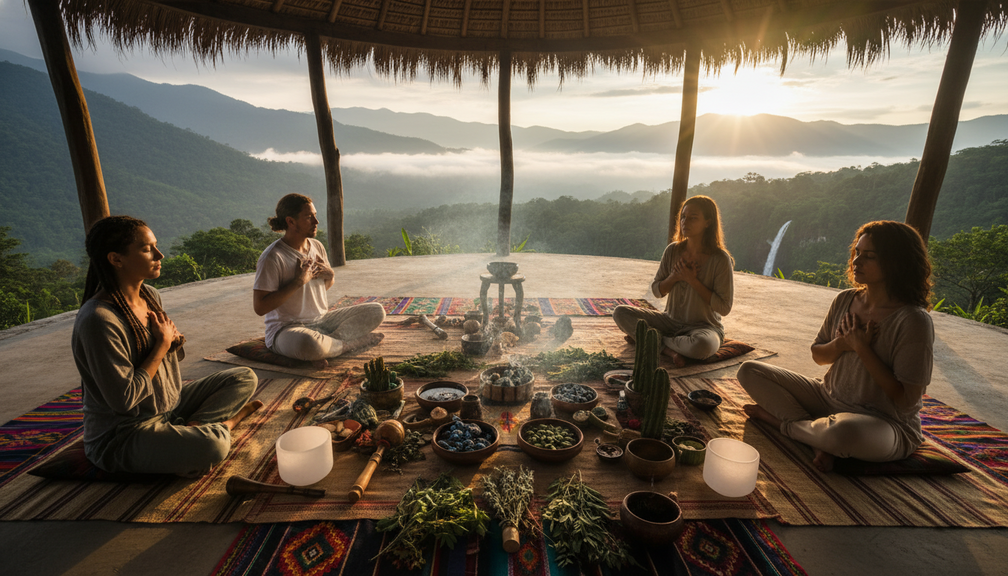
In the world of wellness, a growing trend is emerging with the use of sacred plant medicine for healing trauma and expanding consciousness through ceremonial practices. Entheogenic plants like ayahuasca, psilocybin, and San Pedro have been used for centuries by indigenous cultures for spiritual awakening and inner growth. These plants are now gaining recognition in the mainstream for their profound healing potential. Research has shown that these sacred plant medicines can help individuals release emotional trauma, confront deep-seated fears, and tap into higher states of consciousness. By participating in ceremonial settings under the guidance of experienced shamans or facilitators, individuals can embark on a journey of self-discovery and transformation.
The healing power of sacred plant medicine lies in its ability to access the subconscious mind and bring buried emotions to the surface. Trauma, whether from childhood experiences, past relationships, or societal conditioning, can manifest as physical or emotional blockages in the body. Through the use of entheogenic plants, individuals can delve deep into their psyche, confront their inner demons, and release the pain that has been holding them back. This process of catharsis can lead to profound emotional healing, allowing individuals to move forward with greater clarity, purpose, and resilience.
Moreover, sacred plant medicine ceremonies offer a unique opportunity for individuals to expand their consciousness and tap into higher realms of awareness. The altered states of consciousness induced by these plants can provide insights into the nature of reality, the interconnectedness of all beings, and the deeper meaning of life. Many participants report experiencing profound spiritual epiphanies, a sense of unity with the universe, and a newfound appreciation for the beauty of existence. By transcending the limitations of the ego and connecting with a higher intelligence, individuals can gain a fresh perspective on their lives and cultivate a deeper sense of purpose.
It is important to note that the use of sacred plant medicine should be approached with caution and respect. These powerful substances have the potential to evoke intense emotions, memories, and visions that can be challenging to process. It is crucial to participate in ceremonies led by experienced practitioners who can provide a safe and supportive environment for healing to occur. Integration practices, such as journaling, meditation, and therapy, can also help individuals integrate their psychedelic experiences into their daily lives and make lasting changes.
For those interested in exploring the healing potential of sacred plant medicine, there are a growing number of retreat centers and facilitators around the world offering guided ceremonies and workshops. These retreats typically involve a period of preparation, the ceremonial ingestion of the plant medicine, and integration activities to help participants integrate their experiences. By immersing oneself in the sacred space of a ceremony, surrounded by like-minded individuals and supported by experienced guides, individuals can embark on a transformative journey of self-discovery and personal growth.
In conclusion, the use of sacred plant medicine for healing trauma and expanding consciousness through ceremony offers a powerful path to deep personal transformation and inner healing. By tapping into the wisdom of these ancient plants and participating in intentional ceremonial practices, individuals can unlock the hidden realms of their psyche, confront their deepest fears, and awaken to a higher state of consciousness. While the journey may be challenging at times, the rewards of spiritual growth, emotional healing, and expanded awareness are immeasurable. By embracing the healing potential of sacred plant medicine, individuals can embark on a journey of self-discovery, healing, and spiritual awakening.

Alright, Okjl44 is my new go-to spot. The interface is clean, and the games are smooth. Plus, they have some sweet promotions that keep me coming back for more. Give it a shot! okjl44
18winapp is the real deal; I play on the app and its awesome. Easy to use app, plenty of games and it is safe. You can always get customer service when needed. 18winapp
99bon is a top resource, they have all the best and newest games. Very easy to navigate the site. I highly recommend them. 99bon