
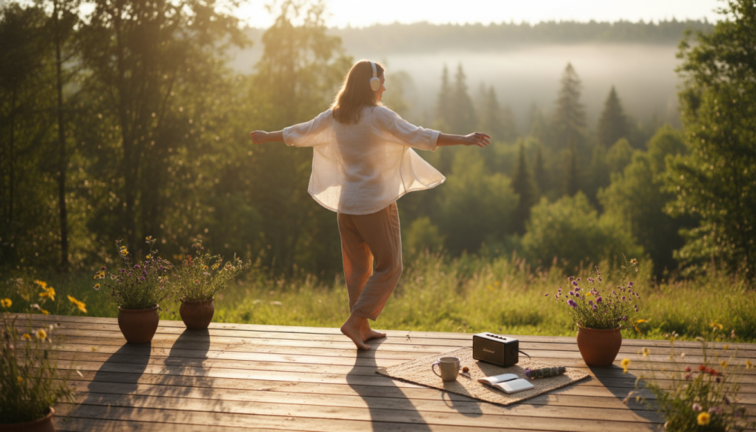
Dancing Your Way to Calm: How Movement and Music Relieve Stress Naturally
In our fast-paced modern lives, stress has become an almost constant companion. From endless to-do lists and work demands to social pressures and global uncertainty, it’s easy to feel overwhelmed. But what if one of the simplest and most joyful ways to manage stress was already within you — literally in your body’s natural rhythm? Dancing, one of humanity’s oldest forms of expression, offers a powerful and scientifically proven way to relieve stress and restore balance to both body and mind.
The Science Behind Dancing and Stress Relief
When you dance, your body produces a cascade of positive biochemical reactions. Physical movement releases endorphins — the brain’s natural feel-good chemicals — which help elevate mood and reduce pain perception. At the same time, dancing lowers the production of cortisol, the hormone most closely associated with stress. This dual action makes dance a natural mood stabilizer and stress reliever.
Research published in Frontiers in Psychology and the Journal of Positive Psychology has shown that regular dance participation can reduce symptoms of anxiety and depression, increase self-esteem, and enhance social connectedness. In other words, the act of moving rhythmically to music doesn’t just feel good — it literally changes your brain chemistry in ways that promote emotional resilience and calm.
Mind-Body Connection Through Movement
One of the most powerful aspects of dance is its ability to bridge the gap between mind and body. Stress often disconnects us — our thoughts race ahead while our bodies tense up. Dancing reverses that split. As you focus on movement, music, and rhythm, you’re pulled into the present moment, much like in meditation or yoga.
This mindful state — where you lose yourself in the movement — helps quiet mental chatter and bring awareness back to the body. The simple act of paying attention to how you move, breathe, and feel allows tension to release and energy to flow freely again. That’s why after a few songs, even if nothing in your external life has changed, your inner world feels lighter.
Dancing as Self-Expression
Beyond physical exercise, dancing is a form of emotional expression. It allows you to communicate feelings that may be difficult to put into words — joy, frustration, sadness, or freedom. When you dance, you give your emotions permission to move through you instead of getting stuck.
This process of expressive movement helps you process emotions in a healthy way, preventing them from turning into chronic stress or anxiety. Whether you dance alone in your living room or with others, it’s a release — a way of saying what words cannot.
Social Connection and the Power of Shared Rhythm
Human beings are wired for connection, and dancing together amplifies that sense of belonging. Group dance — whether it’s a Zumba class, salsa night, or cultural festival — brings people into sync, both physically and emotionally. Moving in rhythm with others creates a sense of unity and trust, releasing oxytocin (the “bonding hormone”) and enhancing feelings of joy and support.
This shared experience can be deeply therapeutic, especially for those who struggle with loneliness or social isolation. In many cultures, dance has long been used as a form of collective healing — a reminder that you’re part of something larger than yourself.
Physical Benefits That Support Mental Health
Of course, dance is also excellent exercise. It improves cardiovascular health, coordination, balance, and flexibility — all of which support overall well-being. Regular physical activity is one of the most effective ways to combat chronic stress, as it helps regulate the body’s fight-or-flight response and encourages deeper, more relaxed breathing.
But unlike traditional workouts, dancing doesn’t feel like a chore. It’s joyful, creative, and adaptable to any fitness level. You can dance in your kitchen, take a class, or join a community group — there’s no wrong way to move. The key is consistency: dancing a few times a week, even for 10 or 15 minutes, can make a measurable difference in stress levels and mood.
Creating Your Own Dance Routine for Stress Relief
You don’t need to be a trained dancer to enjoy the benefits. Here’s a simple approach to making dance part of your wellness routine:
Create a Playlist — Choose songs that lift your mood or match your current feelings. Start slow, then move toward more energetic tracks.
Find Your Space — A small open area where you can move freely is enough.
Let Go of Judgment — Forget about looking good. Focus on how the music feels.
Move Intuitively — Follow your body’s impulses — sway, stretch, jump, spin. There are no wrong moves.
Cool Down — End with slower music and a few deep breaths to relax and ground yourself.
Even five minutes of free movement can shift your mindset and help reset your nervous system after a stressful day.
A Joyful Prescription for Modern Life
In a world where wellness trends often seem complicated or expensive, dance remains simple, accessible, and free. It’s a full-body therapy session, a moving meditation, and a joyful rebellion against stress — all rolled into one. Whether you’re dancing alone in your room, joining a class, or moving with friends under the stars, you’re reconnecting with something ancient, healing, and profoundly human.
So next time you feel tension building, turn up your favorite song and move. Your body knows the rhythm — and your mind will thank you for following it.


u888abcvip.net… Okay, the ‘VIP’ tag makes me suspicious hah! But who knows, maybe it’s actually good. I suggest you do some more research on your side: u888abcvip
Just used dito777login and it was super smooth. No hassles getting in. Definitely a plus in my book. You can find it here: dito777login.